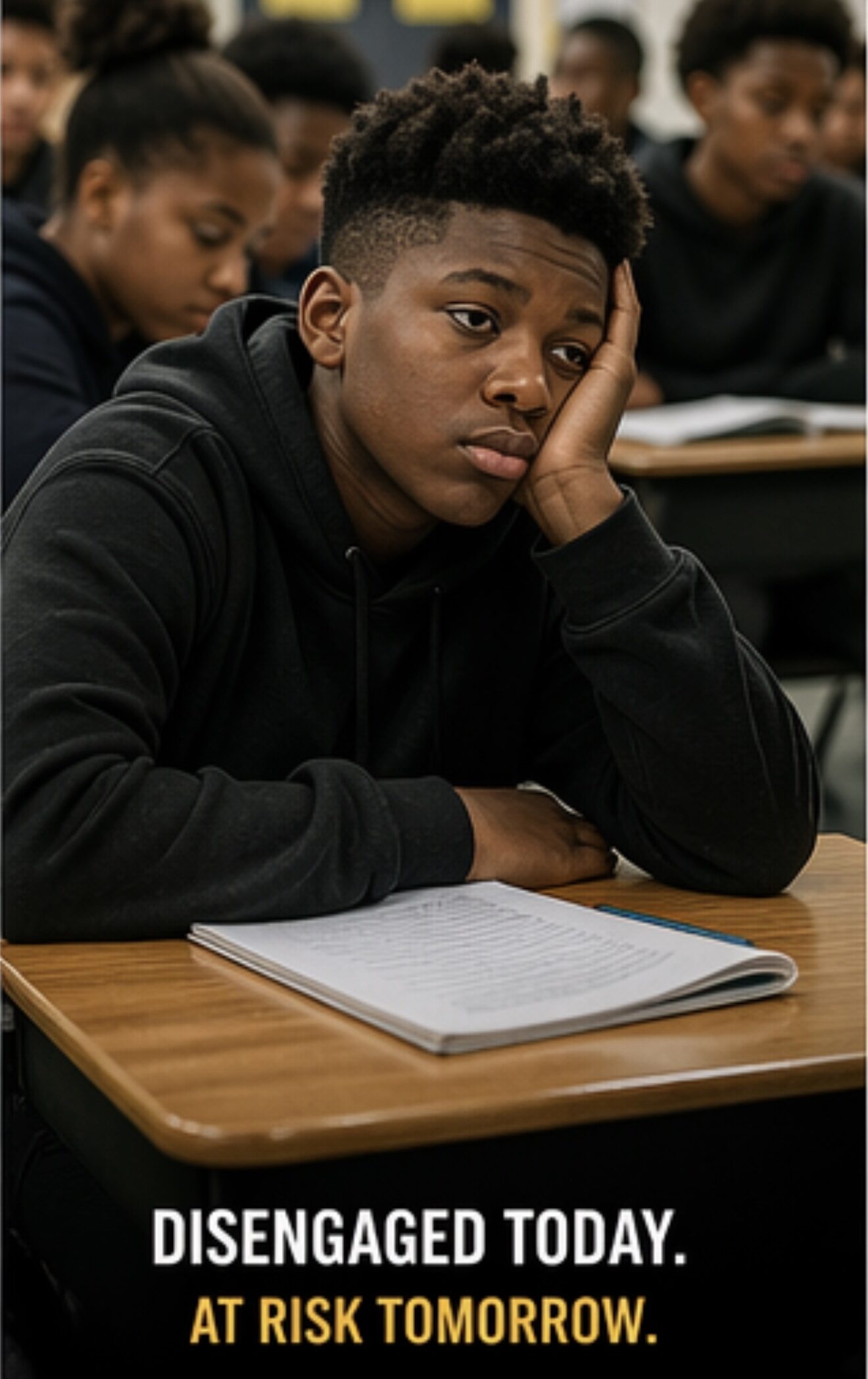
Organizations working with at risk youth and justice impacted individuals are not just dealing with behavior issues.
They are dealing with patterns that repeat, regardless of intervention.
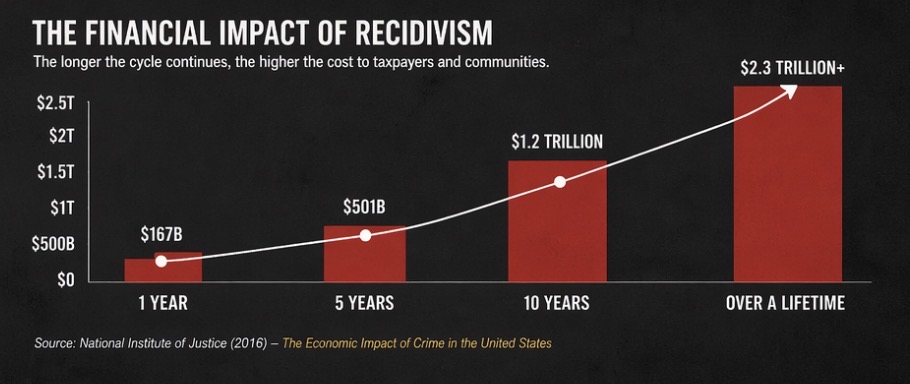
According to the Bureau of Justice Statistics, about 66% of released prisoners are rearrested within 3 years, and over 80% within 10 years.
That is not a one time failure. That is a repeating pattern.
At the same time, the Office of Juvenile Justice and Delinquency Prevention reports that youth involved in delinquency are significantly more likely to experience school failure, substance abuse, and continued justice system involvement.
Most environments try to correct the behavior, but the behavior is not random. It is consistent with something deeper.
People do not just behave, they perform.
The Substance Abuse and Mental Health Services Administration reports that over 60% of justice involved youth have experienced significant trauma or adverse childhood experiences.
Those experiences shape identity, perception, and behavior.
If the internal story is built through trauma, survival, and repetition, then the behavior is not random. It is predictable.
Most interventions target the output– the behavior, the incident, the violation. They respond to what happened without ever reaching what’s driving it.
Rules change conduct temporarily and motivation fades. Awareness without confrontation produces people who can describe their patterns but can’t interrupt them.
Narrative Performance goes to the source.
Every repeated behavior is rooted in a story–one built through trauma, survival, environment and identity. That story runs in the background of every decision, every rejection,every moment of pleasure. Until that story is indentified, interrogated and reconstructed, the behavior it produces doesn’t change.
This is not a therapeutic model. It is a structured, facilitator-led framework deployable across reentry, juvenile justice, workforce development, and school-based settings. It gives practioners a repeatable process and gives participants something no compliance-based program can offer–the internal tools to make a different decision before the moment demand it.
When all three shift, the outcome changes. Not because someone told them to do better, but because the story driving the doing is different.

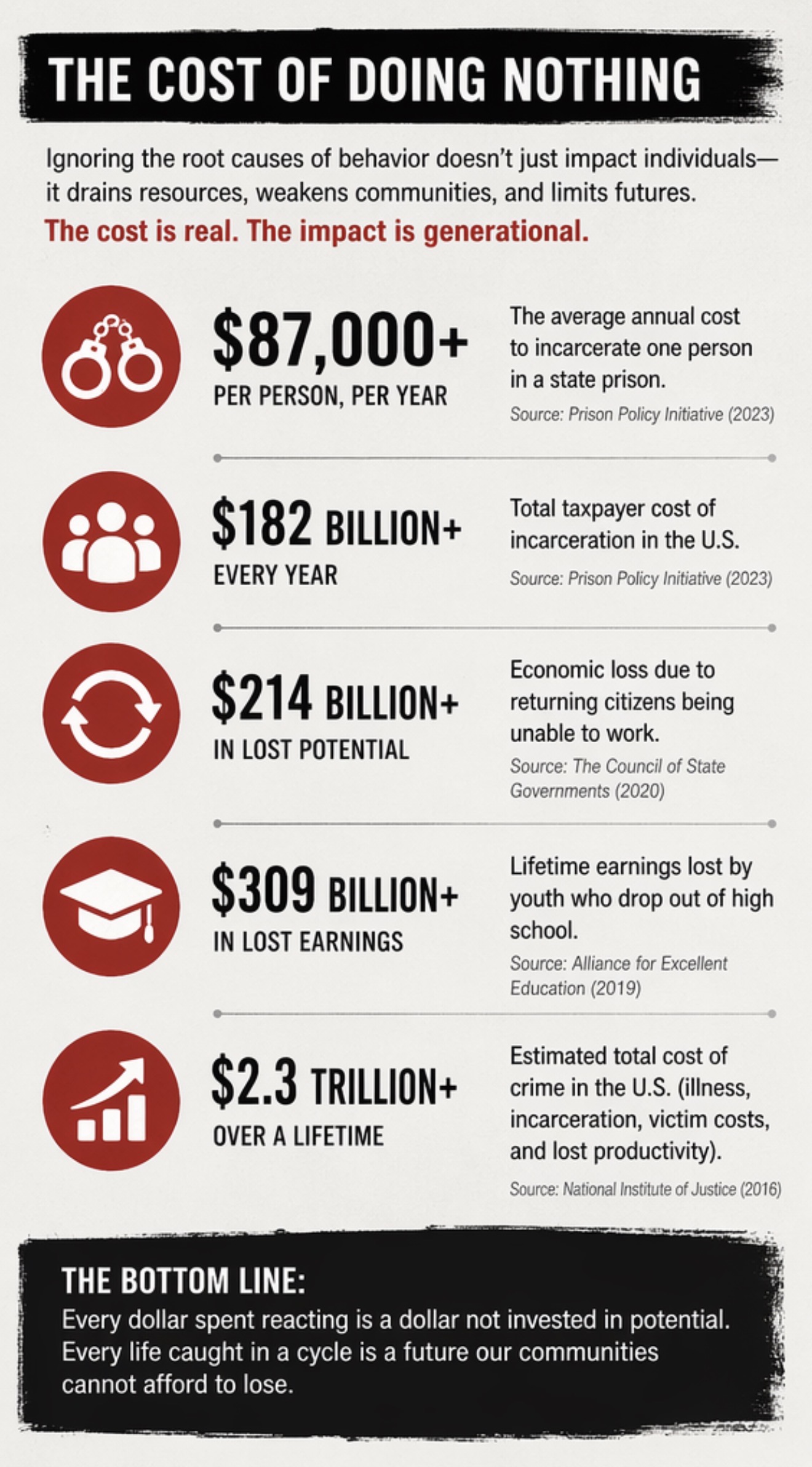
Billions are spent every year reacting to behavior. More rules, more consequences, more prorams that produce the same results.
The cycle doesn’t continue because people are not trying hard enough, it continues because the story driving the behavior never changes.
That’s the one thing Narrative Performance is built to address.
Not the behavior…The story behind it.
Shifting The Narrative